The Hidden Cost of Doomscrolling: How Endless Scrolling Is Stealing Your Life (and How to Take It Back)
Jan 9, 2026

When 5 Minutes Becomes 3 Hours
You unlock your phone to check one notification. You blink. Suddenly it’s dark outside. Three hours are gone. No memory of what you watched, read, or learned — just a vague feeling of mental exhaustion.
This isn’t laziness. This isn’t lack of discipline. This is doomscrolling — and it’s quietly becoming one of the biggest thieves of time, focus, and mental energy in modern life.
In this guide, we’re going deep. Not surface-level “use your phone less” advice — but real explanations, real data, and real strategies to help you:
Understand what doomscrolling actually does to your brain
See how much time it’s really costing you
Recognize the signs before it becomes a habit
Learn how to break the loop without deleting your entire digital life
This is the ultimate breakdown of doomscrolling — and how to DeRot your brain.
What Is Doomscrolling, Really?
Doomscrolling is the habit of endlessly consuming negative, stimulating, or addictive content — often without intention or awareness. It’s not limited to bad news. It includes:
Endless TikTok, Reels, Shorts
Twitter/X refresh loops
YouTube autoplay spirals
Instagram explore rabbit holes
Late-night “just one more” scrolling
The key trait isn’t what you’re consuming. It’s how you’re consuming it.
Doomscrolling is passive. Automatic. Unplanned. And incredibly difficult to stop once it starts.
Why Doomscrolling Is So Addictive
Your phone isn’t neutral. Every scroll, swipe, and refresh is engineered to keep you engaged. The design is intentional.
Here’s what’s happening behind the scenes:
1. Variable Reward Loops
You never know what the next post will be. It might be boring. It might be hilarious. It might be shocking. That unpredictability keeps your brain engaged. This is the same psychological mechanism used in slot machines.
2. Dopamine Micro-Hits
Each new piece of content gives a tiny dopamine spike. Not enough to satisfy you — just enough to keep you chasing the next hit.
3. Low Friction, High Stimulation
There’s zero effort required. No setup. No commitment. No thinking. Just swipe.
The brain loves easy stimulation. And doomscrolling is the easiest stimulation available.
The Real Cost of Doomscrolling (It’s Worse Than You Think)
Let’s talk numbers.
The average person spends between 3–7 hours per day on their phone. Much of that time is passive scrolling.
That means:
21–49 hours per week
1,092–2,548 hours per year
45–106 full days per year
Now multiply that by 10 years.
That’s not just “time on your phone.” That’s:
Books not read
Skills not learned
Conversations not had
Health not improved
Ideas not built
Doomscrolling doesn’t just steal time. It steals potential.
The Mental Effects of Doomscrolling
Even if you don’t notice it, your brain does.
1. Reduced Attention Span
Constant short-form content trains your brain to expect stimulation every few seconds. Long tasks start to feel unbearable.
2. Increased Anxiety
Your nervous system stays in a constant state of alert. Even entertaining content keeps your brain “on.” There’s no real rest.
3. Mental Fatigue
You can be physically rested and mentally exhausted at the same time. Doomscrolling drains cognitive energy.
4. Emotional Numbness
Overexposure to stimulation flattens emotional response. Things that should feel exciting start to feel neutral.
Why Willpower Doesn’t Work
Most people try to fix doomscrolling with discipline.
“I’ll just stop.” “I’ll control myself.” “I’ll be better tomorrow.”
It rarely works.
Why?
Because doomscrolling isn’t a decision problem. It’s a behavior loop.
Trigger: boredom, stress, waiting, discomfort
Action: unlock phone
Reward: stimulation
Until you change the loop, willpower will always lose.
The Hidden Triggers You Don’t Notice
Doomscrolling isn’t random. It’s predictable.
Common triggers:
Waiting in line
Procrastinating a task
Feeling overwhelmed
Feeling lonely
Feeling bored
Avoiding discomfort
Your brain reaches for the fastest relief.
That relief just happens to be in your pocket.
The Illusion of “Just One More”
One of the most dangerous lies in doomscrolling is:
“Just one more.”
Your brain treats each scroll as a small decision. In reality, you’re re-entering a loop.
Once you’re in, the exit friction is high.
This is why 5 minutes becomes 30. Why 30 becomes 2 hours. Why you don’t even remember how it started.
Doomscrolling vs. Intentional Use
Not all screen time is bad.
There’s a massive difference between:
Opening YouTube to learn something
Opening YouTube because your thumb moved on its own
The problem isn’t your phone. It’s unconscious use.
Doomscrolling is what happens when intention disappears.
How Doomscrolling Is Designed to Win
Social platforms optimize for one metric: time on platform.
Not your happiness. Not your mental health. Not your goals.
Every recommendation system, autoplay feature, and infinite feed is designed to reduce friction and increase consumption.
This isn’t conspiracy. It’s business.
And it works.
The Long-Term Identity Impact
This part is subtle — and powerful.
When you doomscroll daily, your brain starts associating:
Boredom = phone
Discomfort = phone
Silence = phone
Over time, your identity shifts.
You become someone who fills every gap with stimulation.
That makes:
Deep work harder
Creative thinking rarer
Stillness uncomfortable
You lose the ability to just be.
The Cost to Your Future Self
Imagine two versions of you.
One who keeps doomscrolling 4–6 hours per day.
One who reclaims even half of that.
In 1 year, the difference is noticeable.
In 3 years, it’s massive.
In 10 years, it’s life-changing.
Doomscrolling compounds — negatively.
So does focus.
Why Most “Digital Detox” Advice Fails
You’ve seen it:
“Delete social media.”
“Turn off your phone.”
“Go offline.”
Unrealistic. Unsustainable. And often unnecessary.
You don’t need to become a monk.
You need control.
The Real Solution: Awareness + Friction
To break doomscrolling, you need two things:
1. Awareness
You can’t change what you don’t see.
When you see how many times you pick up your phone… When you see how many hours go to specific apps… When you see patterns…
Behavior changes naturally.
2. Friction
Not punishment. Not shame.
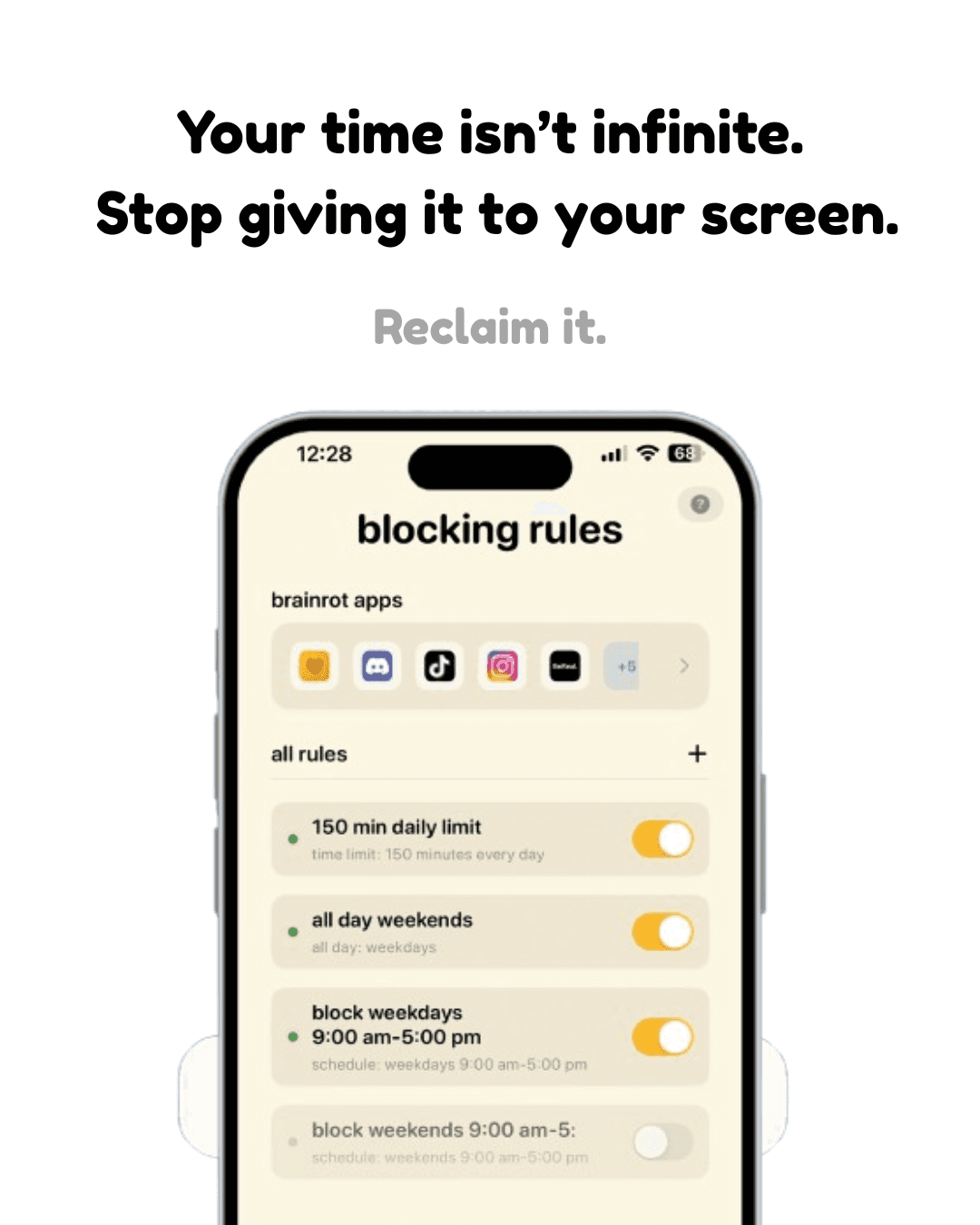
Just enough pause to interrupt the loop.
That pause is everything.
How DeRot Fits In
DeRot isn’t about removing your phone from your life.
It’s about:
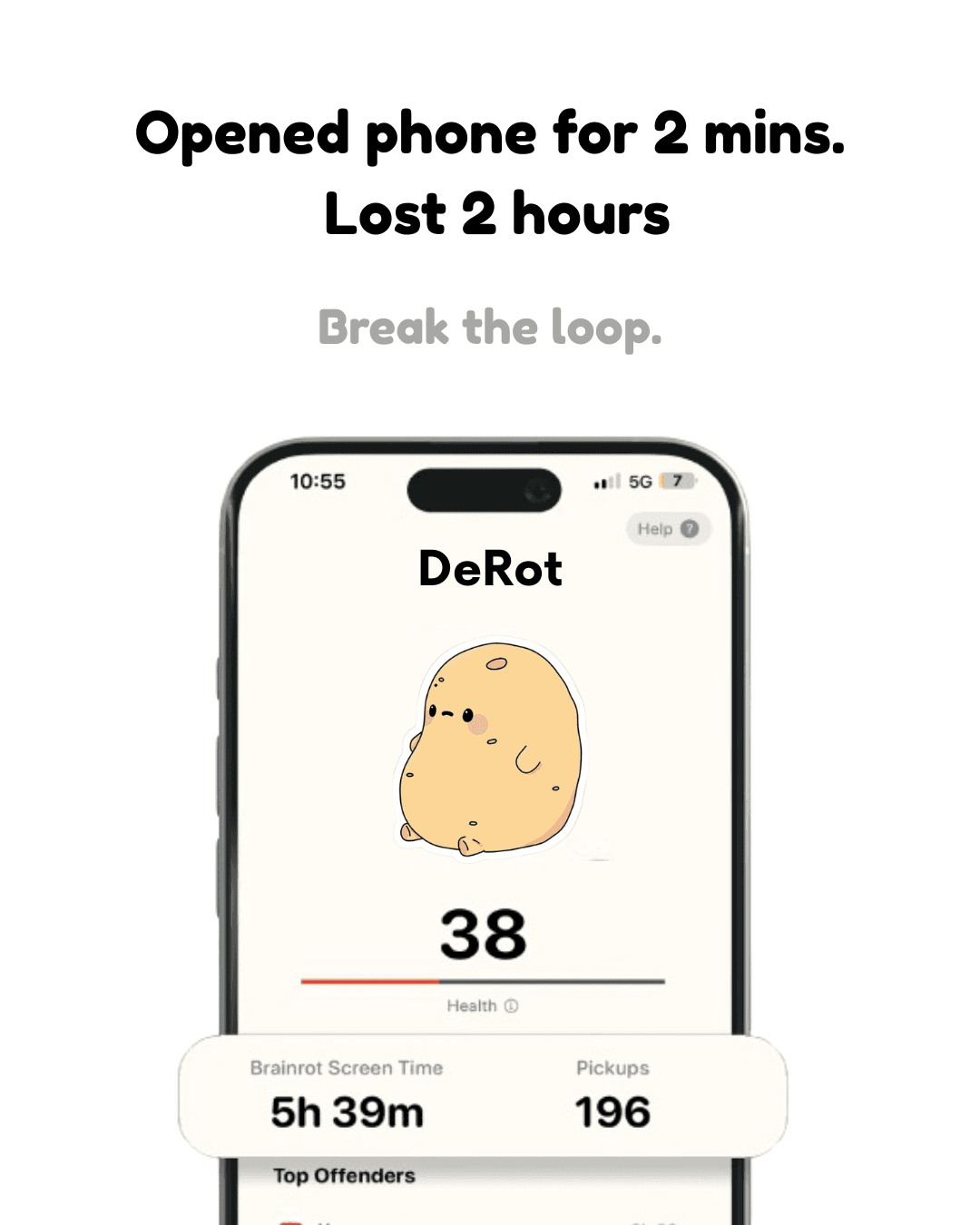
Showing you the reality of your screen time
Making unconscious habits visible
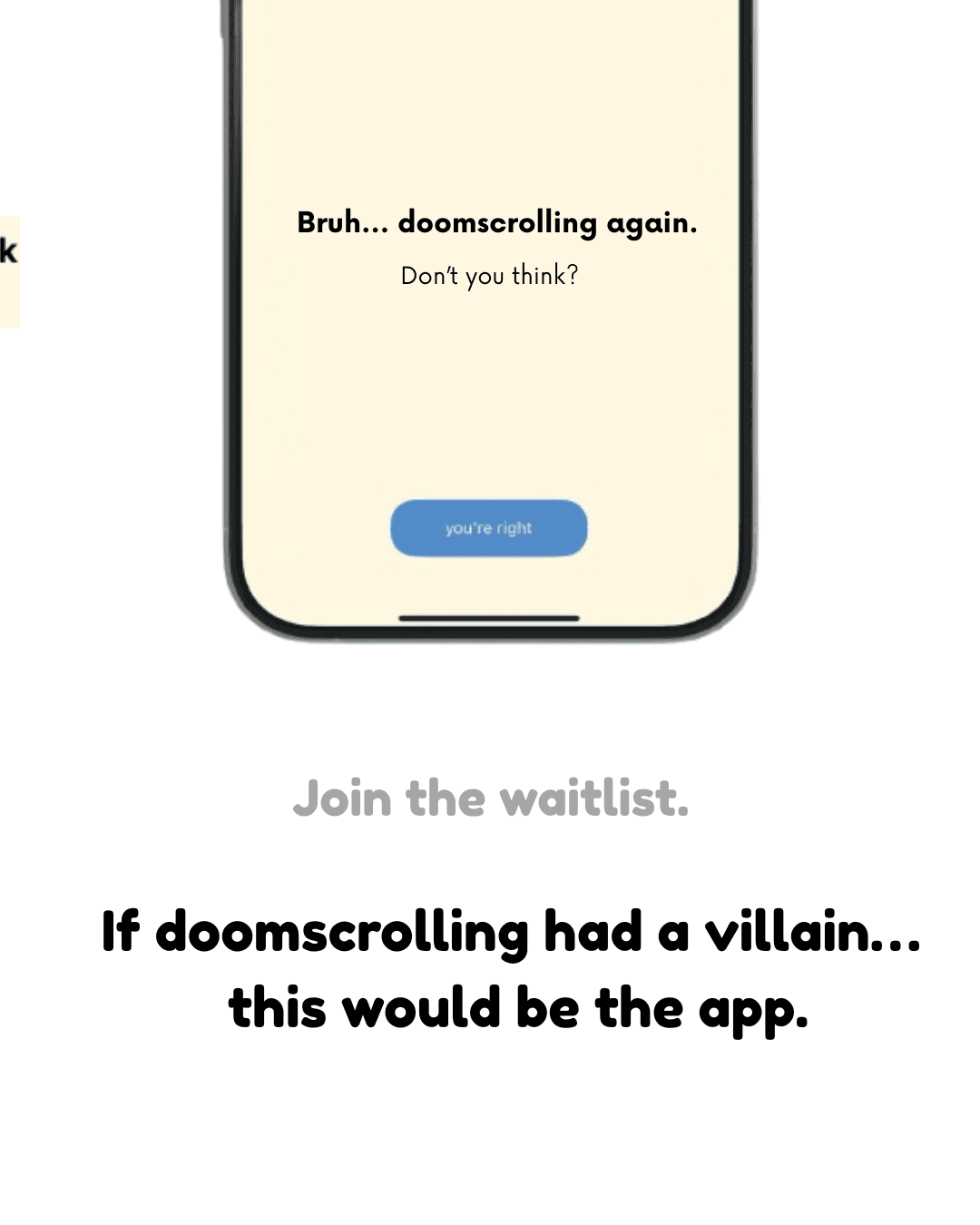
Helping you interrupt doomscroll loops
Giving you back control — without guilt
It’s minimal. It’s honest. It’s built for real humans.
What Happens When You Reduce Doomscrolling
People expect productivity.
They’re surprised by everything else.
Users report:
Better sleep
Clearer thinking
Less anxiety
More presence
Better mood
More time than they thought possible
Not because life changed.
Because attention did.
The Moment That Changes Everything
For most people, the turning point isn’t motivation.
It’s awareness.
The moment you see:
“I opened my phone 146 times today.”
Something clicks.
Not guilt.
Clarity.
And clarity is powerful.
Reclaiming Your Time Is an Identity Shift
This isn’t about being productive.
It’s about deciding:
“My time is not disposable.”
That single belief changes everything.
A Simple Exercise (Do This Today)
Tonight, before bed, ask yourself:
How many times did I unlock my phone?
Did I choose to scroll — or did it happen?
What did I avoid?
No judgment.
Just awareness.
You’re Not Broken. The System Is Addictive.
If you struggle with doomscrolling, it doesn’t mean you’re weak.
It means you’re human.
And your phone is very, very good at its job.
The Bigger Picture
This generation will be defined by attention.
Not money. Not status.
Attention.
What you give it to. What you protect it from.
Doomscrolling is the tax.
DeRot is the rebellion.
Final Thoughts: You Don’t Need More Time. You Need Less Scroll.
You already have enough time.
It’s just leaking.
And leaks can be fixed.
Ready to Take Your Time Back?
If this hit, it’s not by accident.
You don’t need another motivational quote.
You need a system.
Join the DeRot waitlist by clicking the link below and start reclaiming your attention.
Your future self will thank you.
https://tr.ee/odG8QVQjfI
This is the first post in the DeRot blog series. More deep dives coming on screen addiction, habit loops, focus, and digital minimalism.